



PENFS Therapy in Oklahoma City
Ear-Based Neurostimulation Support With Morph and POSP Device Options
Percutaneous electrical nerve field stimulation, often abbreviated PENFS, is an office-based form of ear-level neurostimulation that uses a small wearable device placed behind the ear. Thin stimulation leads are positioned around specific areas of the outer ear, where branches of cranial and peripheral nerves can be gently stimulated over several days.
At OK Theta & Wellness in Oklahoma City, PENFS may be considered for select patients as part of a broader pain, recovery, or nervous-system support plan. Depending on the person’s goals, history, and clinical review, device options may include the Morph Device or POSP Device.
PENFS is sometimes searched for as PNFS, auricular neurostimulation, percutaneous nerve field stimulation, or ear-based nerve stimulation. Because devices, indications, and coverage rules can vary, our team uses careful screening and patient-specific guidance rather than a one-size-fits-all approach.

A Non-Implanted, Drug-Free Neuromodulation Option
PENFS is designed to provide continuous stimulation while the device is worn. Unlike implanted stimulators, PENFS does not require surgery or permanent hardware. The device is placed in the office and is typically worn for several days before removal.
Non-implanted
No permanent device is placed in the body.
Drug-free
PENFS uses electrical stimulation rather than medication.
Office-based placement
Placement is performed by a trained clinical provider.
Worn for several days
The device provides ongoing stimulation during the wear period.

Who Might Ask About PENFS?
PENFS may be discussed with people looking for a clinically supervised, non-implanted neuromodulation option. Whether it is appropriate depends on the device being considered, the person’s health history, the intended use, and the supervising provider’s clinical judgment.

Chronic Pain Support
Some people ask about PENFS as part of a broader pain-management conversation, especially when they are trying to reduce reliance on medication or explore neuromodulation-based options.
Opioid Withdrawal Symptom Support
Certain ear-based neurostimulation devices have been used as an aid in reducing symptoms associated with opioid withdrawal. This should be approached as part of a supervised care plan.
Post-Operative Pain Support
Some device options are designed for short-term support after specific types of surgery. Appropriateness depends on the procedure, timing, medical history, and provider review.
Diabetic Neuropathy Pain
Some percutaneous neurostimulation devices have specific cleared uses related to chronic, intractable pain from diabetic peripheral neuropathy. Device selection and eligibility should be reviewed carefully.
What Are the Potential Benefits of PENFS?
PENFS is used to stimulate nerve pathways around the ear that are involved in pain processing, autonomic signaling, and nervous-system regulation. Individual responses vary, and results are not guaranteed.


Interest in a non-implanted neuromodulation option
Desire for a drug-free support tool
Need for short-term continuous stimulation
Interest in reducing symptom burden during a defined wear period
Looking for options that may complement medical care, therapy, bodywork, or recovery planning
Preference for an office-based procedure rather than surgery or implanted hardware
PENFS is not a substitute for emergency care, medical diagnosis, addiction treatment, diabetes care, surgical follow-up, or pain-management oversight.
What to Expect
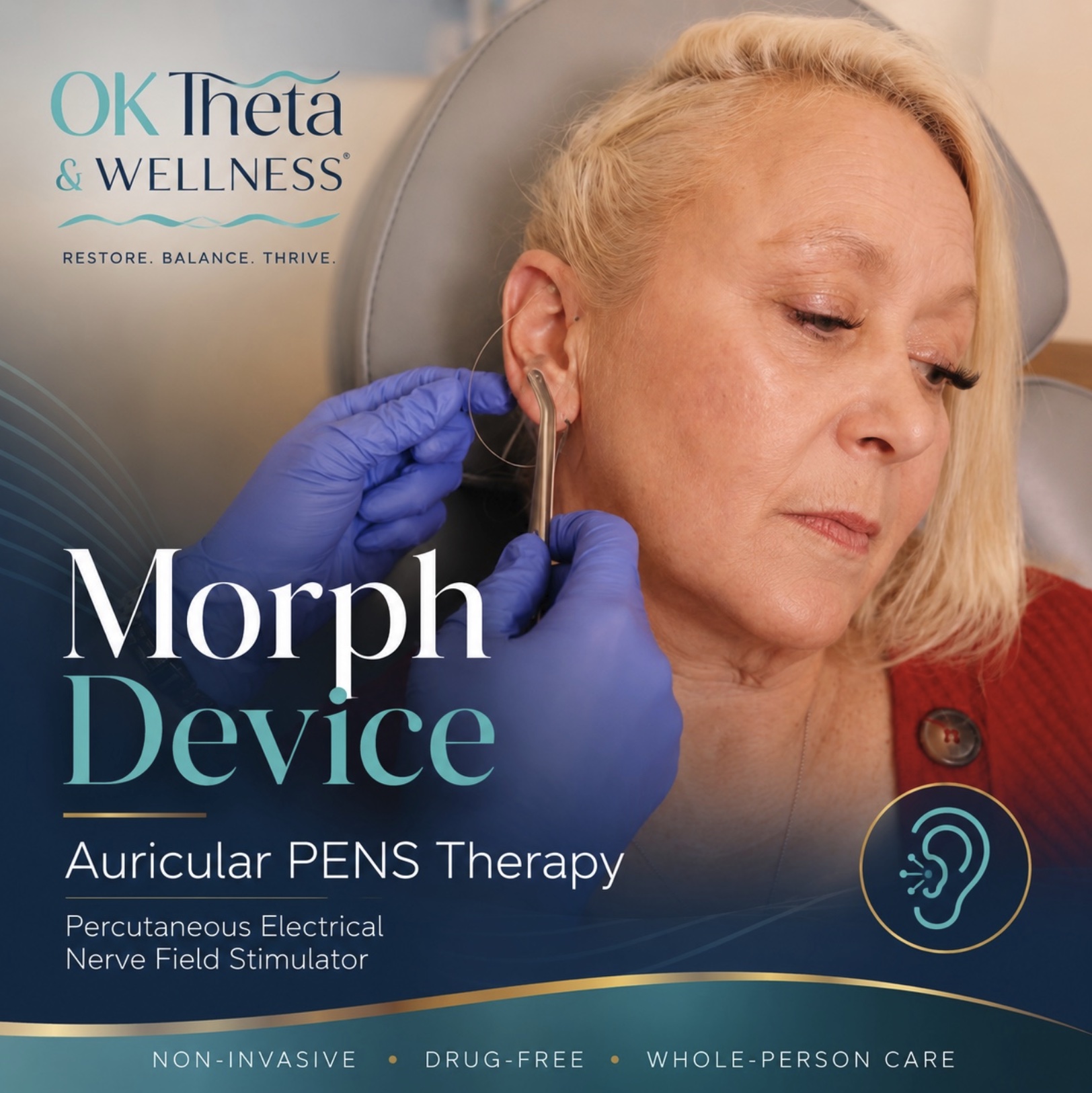
Many PENFS devices use small stimulation leads or tiny needle-like contacts connected to thin wires that wrap around the ear, ending in a small pulse generator worn behind the ear. During your visit, the provider will review your health history, current medications, goals, and any relevant precautions.
Our nurse practitioner, Deana Glenn, is a certified provider who prescribes and places these devices in our office. The placement procedure takes less than an hour. The device is usually worn continuously for up to 5 days. You will receive instructions on sleeping, showering, activity, and when to call the office.
Device Options
The Morph Device
The Morph Device is an ear-based neurostimulation option used in select clinical situations where short-term, non-implanted stimulation may be appropriate. It may be discussed for patients exploring support related to opioid withdrawal symptoms, chronic pain, or other device-specific uses.
Because device indications and payer rules can be specific, we review each case individually before determining whether Morph is an appropriate option.
The POSP Device
The POSP Device is a stronger stimulation option designed for select post-operative pain-support situations. It may be considered when short-term neuromodulation is appropriate after a qualifying procedure and after review by the supervising provider.
POSP is not automatically appropriate for every surgery or every patient. The decision depends on medical history, timing, surgical context, and clinical review.

Learn More About Nervous System Support
PENFS fits into a larger conversation about pain signaling, autonomic regulation, sleep, stress physiology, and how the body returns to baseline. If you are exploring ear-based neurostimulation, these articles can help you understand why we often think beyond one symptom or one device and instead look at the nervous system, circulation, movement, and recovery capacity together.
Morph Device: Ear-Based Neurostimulation Support
Learn how the Morph Device fits into a broader conversation about pain, nervous system regulation, and drug-free support options.
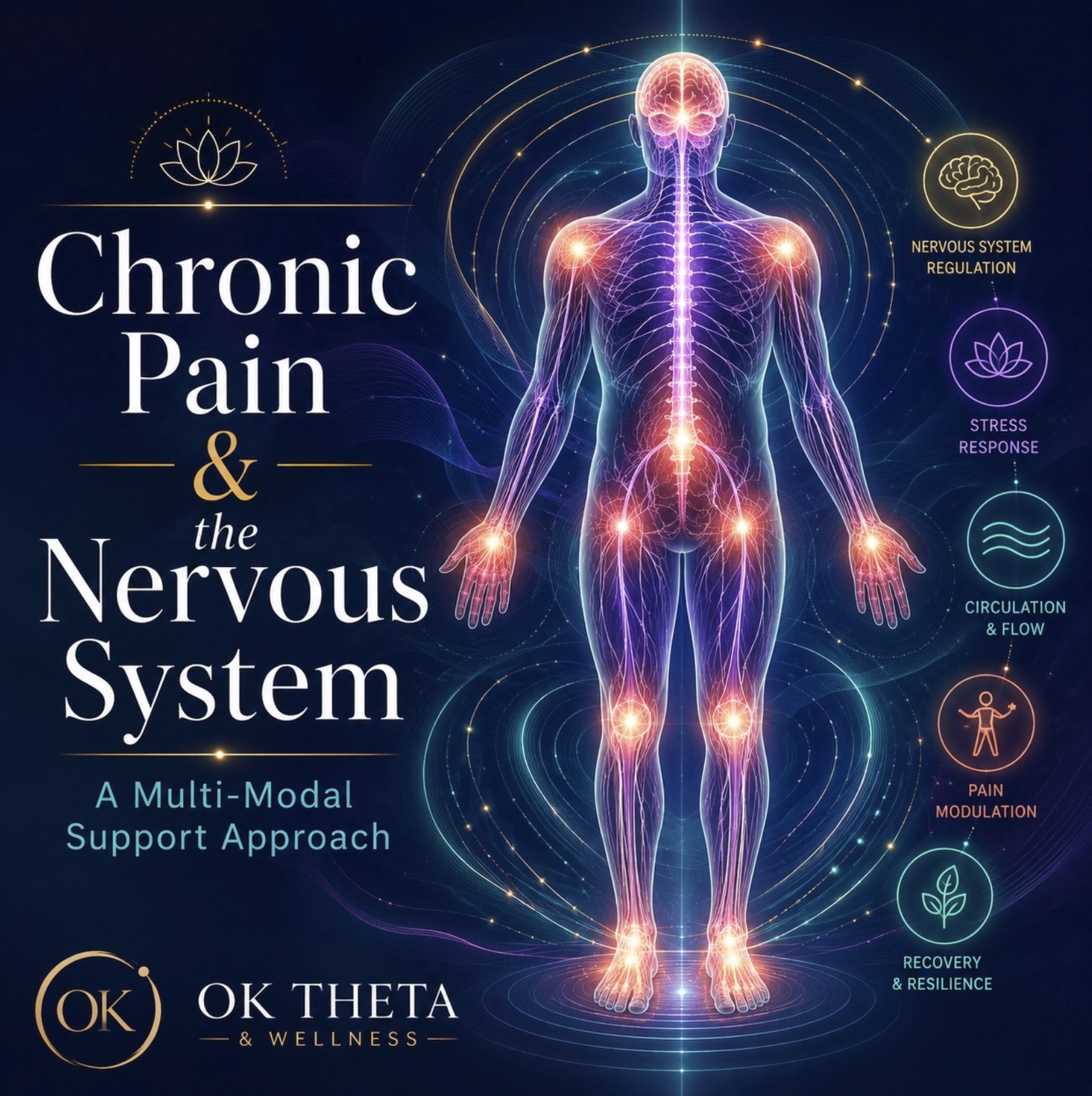
Chronic Pain and the Nervous System
Pain is not always only a tissue problem. Learn how guarding, sleep, stress, movement, and nervous-system sensitivity can feed the chronic pain loop.
Long COVID and Dysautonomia Support
Explore how circulation, nervous-system regulation, and ear-based neuromodulation may fit into a broader support model for dysautonomia and recovery capacity.
Is PENFS Right for You?
PENFS may be worth discussing if you are looking for a non-implanted, drug-free neuromodulation option and want careful guidance about whether a device such as Morph or POSP fits your situation.
At OK Theta & Wellness, we do not present PENFS as a cure or a guaranteed solution. Instead, we use a thoughtful screening process to determine whether it may be a reasonable part of your broader care or recovery plan.
Important Safety Note
PENFS may not be appropriate for everyone. People with implanted electrical devices, bleeding disorders, certain skin conditions around the ear, active infection, pregnancy-related concerns, or complex medical histories should be reviewed carefully before placement.
This information is educational and does not replace medical care. Any attempt to diagnose or treat a medical condition should occur under the direction of a qualified healthcare professional.
Frequently Asked Questions

Is PENFS the same as PNFS?
Not exactly. The terms are often used loosely online, but PENFS is the more precise term for percutaneous electrical nerve field stimulation, especially when discussing ear-based stimulation involving cranial nerve fields around the outer ear. PNFS may refer more broadly to peripheral nerve field stimulation approaches, so we use PENFS as the primary term on this page.
Is the Morph Device a PENFS device?
The Morph Device is an ear-based percutaneous neurostimulation device. For patient education, it is reasonable to discuss Morph under the broader category of PENFS, PENS, or auricular neurostimulation, while still being careful about device-specific indications, patient selection, and coverage rules.
Is PENFS non-invasive?
PENFS is better described as non-implanted or minimally invasive, rather than non-invasive. The device is worn externally behind the ear, but small stimulation leads are placed around the outer ear.
How long do you wear the device?
Wear time depends on the device and intended use. For example, the Morph Device is typically worn for up to 5 days. Your provider will give you device-specific instructions for showering, sleeping, activity, device care, and removal.
What does PENFS feel like?
Most people describe the sensation as mild stimulation, tingling, pulsing, or sometimes little to no noticeable sensation after placement. Sensation can vary depending on the device, placement, sensitivity, and intended use.
Does PENFS treat chronic pain?
Some people ask about PENFS as part of a broader pain-management conversation. Whether it is appropriate depends on the device, indication, health history, goals, and provider review. We avoid presenting PENFS as a cure or guaranteed pain-relief treatment.
Can PENFS help with opioid withdrawal symptoms?
Certain ear-based neurostimulation devices have been used as an aid for reducing symptoms associated with opioid withdrawal. This should be part of a supervised care plan and should not be viewed as a stand-alone treatment for opioid use disorder.
Is PENFS used for diabetic neuropathy pain?
Some devices in the broader PENS/PENFS category have FDA-cleared uses related to chronic, intractable pain from diabetic peripheral neuropathy. Device labeling, patient eligibility, treatment schedule, and coverage rules can be specific, so this should be reviewed carefully before deciding whether a device is appropriate.
Is POSP the same as Morph?
No. Morph and POSP are different device options and should not be treated as interchangeable. POSP is generally discussed in select post-operative pain-support situations, while Morph may be discussed for other device-specific uses. The right option depends on clinical review, timing, health history, and intended use.
Is PENFS covered by insurance?
A CPT code exists for certain PENFS placement services, but that does not guarantee coverage. Insurance decisions vary by payer, diagnosis, documentation, device, medical-necessity rules, and the patient’s individual plan.
How do I know whether Morph, POSP, or another option is right for me?
That decision requires a clinical review. We look at your goals, health history, current medications, symptoms, relevant diagnoses, and the intended use of the device. If PENFS is not a good fit, we may discuss other supportive options available at OK Theta & Wellness.
Is PENFS a replacement for medical care?
No. PENFS is not a replacement for emergency care, diagnosis, addiction treatment, diabetes care, surgical follow-up, pain-management oversight, or ongoing care with your medical team. It may be discussed as a supportive option when appropriate.
Is PENFS Worth Discussing?
If you are exploring non-implanted, ear-based neurostimulation, PENFS may be worth a conversation. At OK Theta & Wellness, we review your goals, health history, current concerns, and device-specific considerations before determining whether Morph, POSP, or another supportive option may be appropriate.
PENFS is not a one-size-fits-all service, and responses can vary. A consultation can help clarify whether this type of neuromodulation fits your situation.
