



CADScor Heart Sound Assessment in Oklahoma City
A non-invasive, radiation-free acoustic assessment that helps risk-stratify stable symptoms related to coronary artery disease.
At OK Theta & Wellness, CADScor offers a quick, non-invasive way to evaluate heart sound patterns associated with coronary artery disease risk. The CADScor System uses highly sensitive acoustic recording and advanced computational processing to generate a patient-specific CAD-score, helping identify whether symptoms may be less likely or more concerning for significant coronary artery disease.
This assessment is not emergency care and does not replace evaluation by a physician or cardiologist. Instead, CADScor can help provide more clarity when stable symptoms, risk factors, or cardiovascular concerns deserve a closer look.

Non-Invasive & Radiation-Free
No Needles or Treadmill
Results in About 10 Minutes

What Is CADScor?
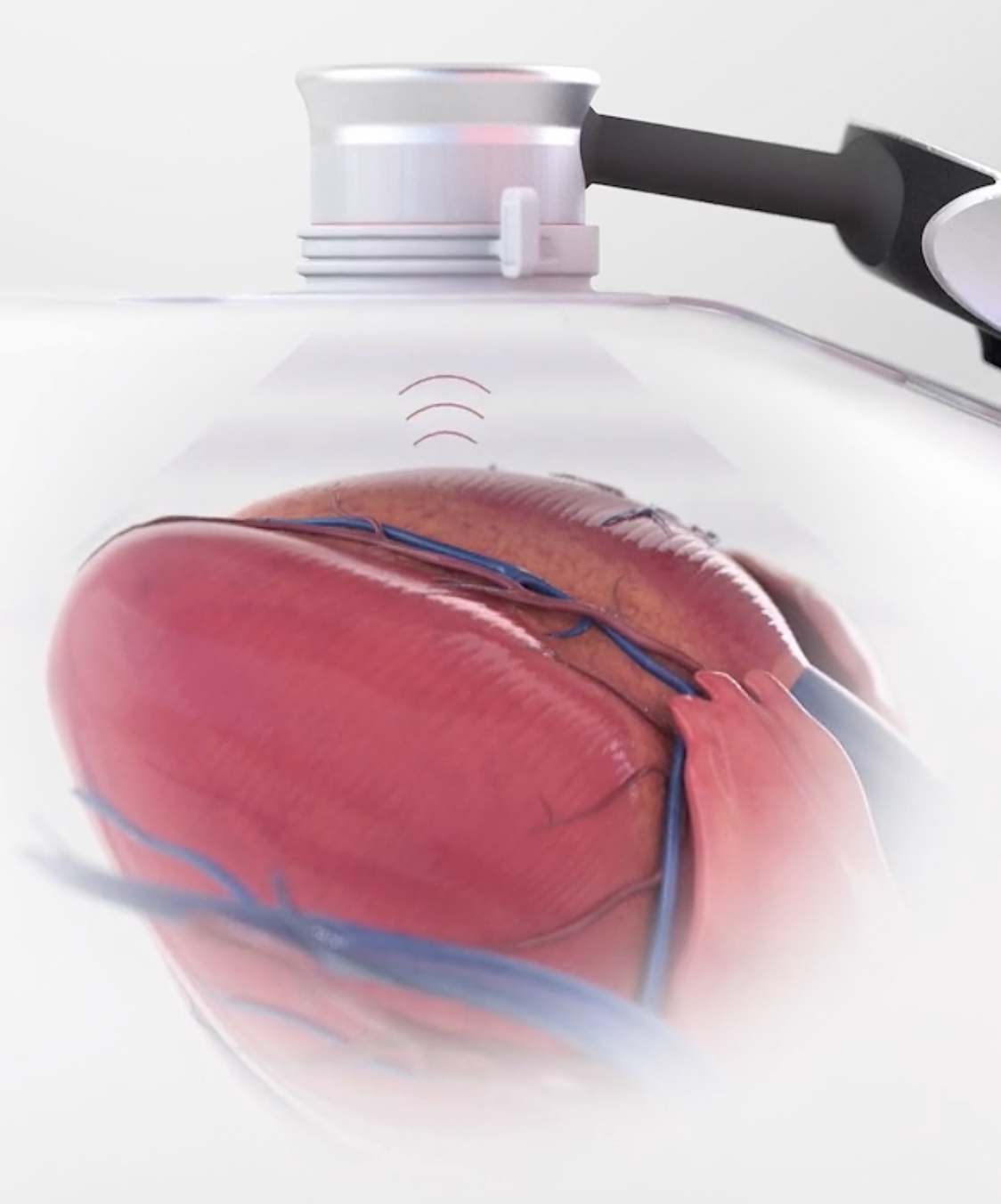
CADScor is a heart sound-based assessment designed to help risk-stratify coronary artery disease. The system records subtle heart sounds, murmurs, and vibrations from the chest surface and uses advanced computational processing to calculate a patient-specific CAD-score.
Coronary artery disease can sometimes affect blood flow and heart sound patterns in ways that are not heard with a traditional stethoscope. CADScor is designed to analyze these subtle acoustic signals and provide additional information that may help guide next steps.

Records Subtle Heart Sounds
CADScor uses a sensitive chest sensor to record acoustic signals, murmurs, and vibrations from the heart.
Analyzes Acoustic Patterns
The system uses advanced computational processing to evaluate sound patterns that may be associated with coronary blood flow.
Generates a CAD-Score
CADScor provides a patient-specific score that may help guide whether further medical evaluation is appropriate.

Who Might Consider CADScor?
CADScor may be considered for people with stable symptoms or concerns that could be related to coronary artery disease. This non-invasive heart sound assessment can help clarify whether symptoms appear less likely or more concerning for significant coronary artery disease.

Stable Chest Discomfort
CADScor may be considered when chest discomfort is stable, recurring, or appears with activity, stress, or exertion.
Shortness of Breath
Breathlessness, reduced stamina, or feeling unusually winded may deserve a closer look when symptoms are stable.
Atypical Heart-Related Symptoms
Some people experience pressure, tightness, fatigue, or vague discomfort rather than classic chest pain.
Concern About CAD Risk
CADScor may help provide additional information when risk factors or symptoms raise concern about coronary artery disease.
CADScor is not emergency care. If you are experiencing severe, sudden, worsening, or concerning chest pain, shortness of breath, sweating, nausea, lightheadedness, or pain into the jaw, neck, back, shoulder, or arm, seek emergency medical care immediately. CADScor may also not be appropriate for certain people, including individuals with implanted cardiac electronics such as pacemakers, ICDs, or heart pumps. If you have an implanted device or a known cardiac history, please let us know so we can determine whether CADScor is appropriate.
How the CADScor Assessment Works
The CADScor assessment is simple and comfortable. You will rest quietly before the assessment so the recording can be performed under calm, consistent conditions. A single-use sensor patch is placed on the chest in a specific position. The device records subtle acoustic signals from the heart. You may be guided through brief breathing or breath-hold instructions during the test. The system calculates a CAD-score between 0 and 99. The result helps classify whether the acoustic pattern suggests lower or elevated risk of significant coronary artery disease. Your result is reviewed in context. A low score may provide reassurance when symptoms are stable. An elevated score does not diagnose coronary artery disease, but it may suggest that medical follow-up or cardiology evaluation is appropriate.

Step 1: Rest Before the Recording
Step 2: Sensor Placement
Step 3: Heart Sound Recording
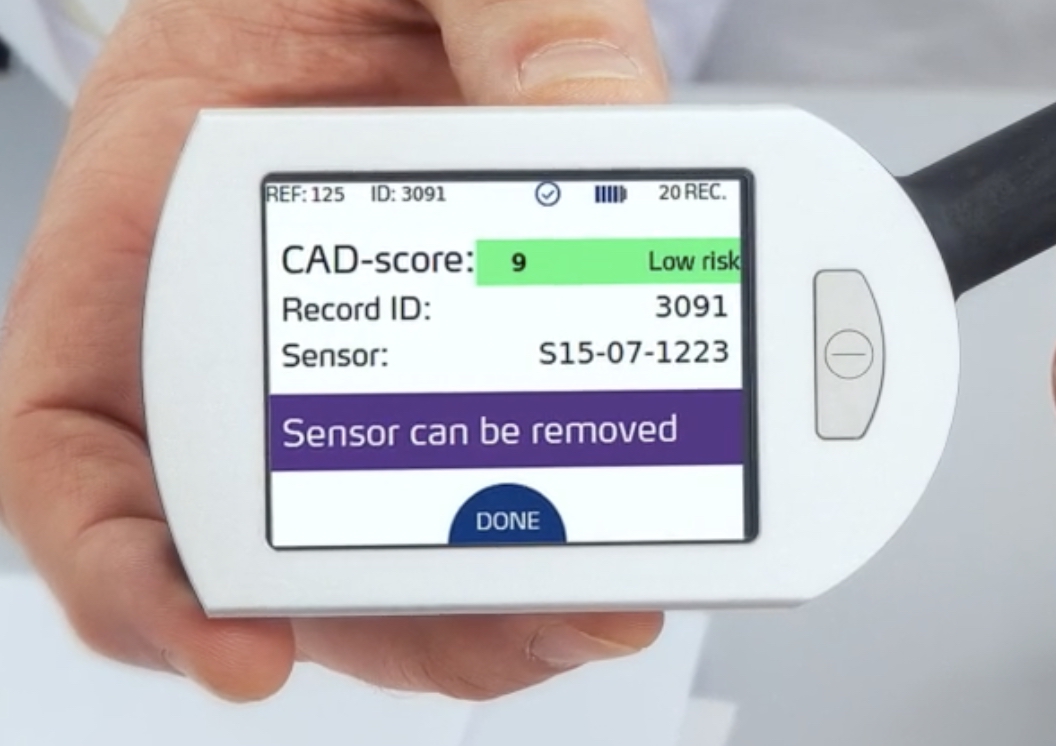
Step 4: CAD-Score Result
Step 5: Next-Step Guidance
What Does the CAD-Score Mean?
The CAD-Score is a patient-specific score that helps indicate the risk of significant coronary artery disease.
Low CAD-Score
A low CAD-score may suggest a lower likelihood of significant obstructive coronary artery disease. If symptoms persist, worsen, or remain concerning, medical evaluation is still important.
Elevated CAD-Score
An elevated CAD-score does not diagnose coronary artery disease by itself. It means the acoustic pattern and risk profile may be more concerning, and follow-up with a physician or cardiologist may be appropriate.


Why Heart Sound Analysis?
Blood flow through narrowed coronary arteries may create subtle vibrations or acoustic patterns. CADScor uses highly sensitive phonocardiography to record sounds and vibrations from the heart that may not be audible during a standard stethoscope exam.
The system combines acoustic information with patient-specific risk factors to produce a CAD-score that may help clarify whether further evaluation should be considered.
CADScor is best understood as a risk-stratification tool. It is one piece of information, not the entire cardiovascular picture.
(405) 849-5165
CADScor Assessment Pricing
CADScor Heart Sound Assessment: $200

See What Your CADScor Report Can Show
A non-invasive, radiation-free acoustic assessment that generates a patient-specific CAD-score. CADScor may help risk-stratify stable symptoms related to coronary artery disease and guide whether further medical follow-up may be appropriate.
Not available for online scheduling.
To schedule, call 405-849-5165 or email info@oktheta.com.
CADScor and EECP: Two Different Roles
CADScor and EECP serve different purposes
CADScor helps assess risk related to significant coronary artery disease using heart sound analysis.
EECP therapy uses external compression cuffs to support circulation, diastolic blood flow, and cardiovascular function over a series of sessions.
For patients who are concerned about cardiovascular health, these services may belong in the same conversation, but they are not the same service. CADScor helps clarify risk. EECP is a therapy option that may be considered separately based on a person’s history, goals, and medical appropriateness.

Frequently Asked Questions
Is CADScor a heart scan?
No. CADScor is not a CT scan, ultrasound, stress test, or angiogram. It is an acoustic heart sound assessment that uses a chest sensor and computational processing to generate a CAD-score.
Does CADScor diagnose coronary artery disease?
CADScor is a diagnostic aid and risk-stratification tool. It does not replace a physician, cardiologist, emergency evaluation, CT angiography, stress testing, or other medical testing when those are appropriate.
How long does the assessment take?
The recording itself is brief, and the full visit is typically designed to be quick and comfortable, around 10-15 minutes.
Does CADScor use radiation?
No. CADScor is non-invasive and radiation-free.
What does a low CAD-score mean?
A low CAD-score may suggest a lower likelihood of significant obstructive coronary artery disease. If symptoms persist or worsen, medical evaluation is still important.
What does an elevated CAD-score mean?
An elevated CAD-score does not confirm coronary artery disease, but it may suggest that further medical evaluation or cardiology follow-up is appropriate.
Can I use CADScor instead of going to the ER?
No. CADScor is not emergency care. If you are having active, severe, worsening, or concerning symptoms, call 911 or seek emergency medical care.
Can I have CADScor if I have a pacemaker or implanted cardiac device?
CADScor may not be appropriate for people with implanted cardiac electronics such as pacemakers, ICDs, or heart pumps. Please let us know before scheduling.
Looking for More Clarity About Your Risk of Coronary Artery Disease?
If you have stable symptoms such as chest discomfort, shortness of breath, or concern about whether your symptoms may be heart-related, CADScor may help provide an additional layer of information.
Contact OK Theta & Wellness in Oklahoma City at 405-849-5165 to ask whether a CADScor heart sound assessment is appropriate for you.
(405) 849-5165
Ready to Get Your CAD-Score?
CADScor assessments are scheduled by phone or email only. Contact OK Theta & Wellness by phone or email to ask whether this heart sound assessment is appropriate for you.
